14 January 2015

Seville Orange Marmalade

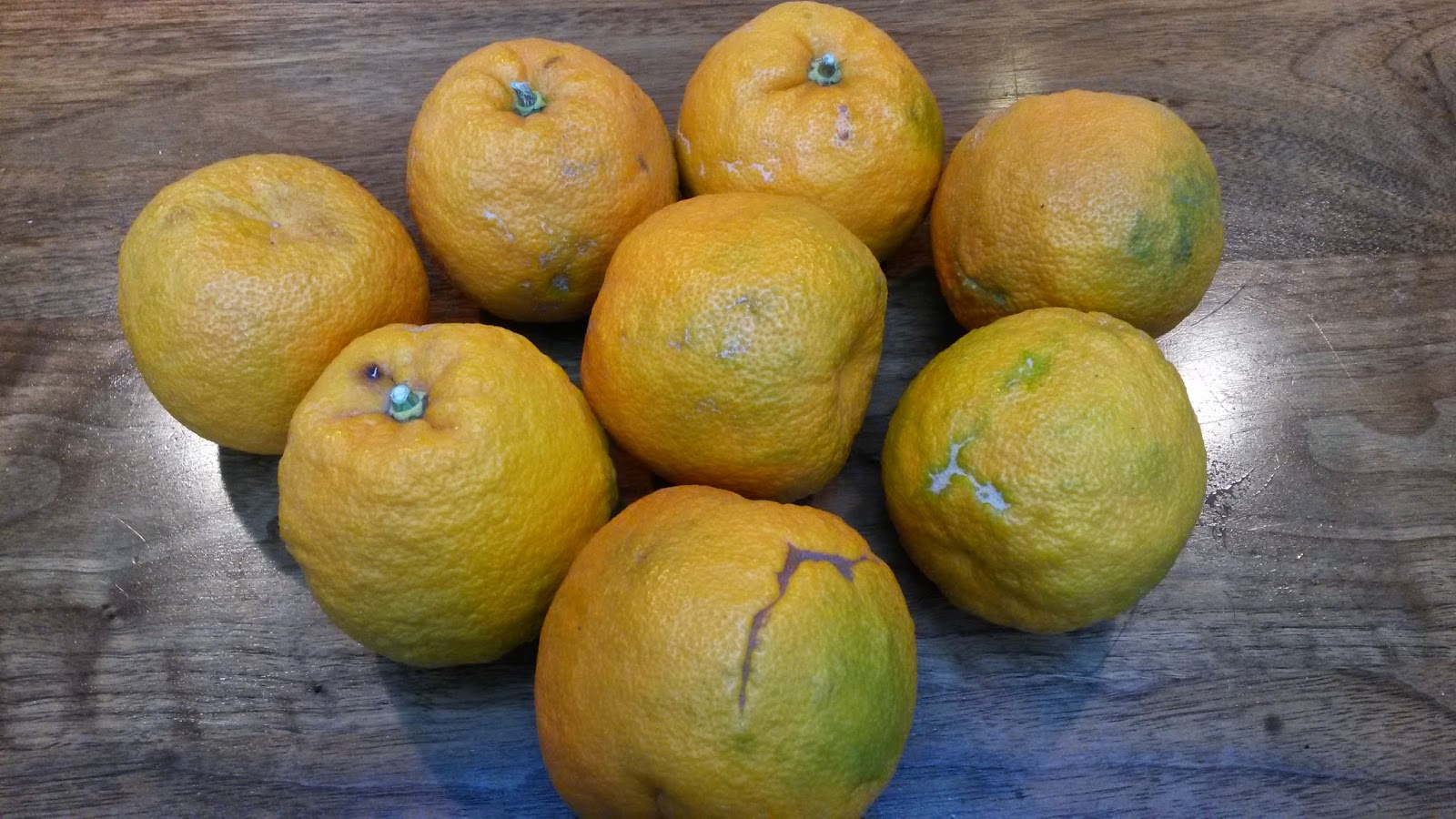
Seville oranges

On a wet and windy Saturday morning in early January, I was pleased to find several boxes of Seville oranges on sale at my local greengrocers. Suddenly I knew what I was going to do on such a dismal weekend: make marmalade. These lumpy and often misshapen oranges are available for a few short weeks in January. As the name suggests, Seville oranges are grown around Seville, primarily for British marmalade production - apparently the Spanish aren't big fans and don't keep many for themselves.

6 January 2015

Blood orange, radicchio and florence fennel salad


I love winter food: stews, roasts and pies feel right on cold, damp days. Sometimes though, I get the urge for a good salad. This is a tasty little salad with a southern European feel, using some seasonal winter produce. It works well as a starter, a palate cleanser after a heavy meal, or with grilled fish. The tangy citrus of the blood orange works nicely with the bitter radicchio and mild aniseed flavour of the fennel. Like all salads, it is more of a suggestion than a rigid recipe. If you like aniseed, you could also add in a small bunch of roughly chopped chervil. Before blood oranges are in season you could use satsumas. Serves 4-6.

2 January 2015

What's in season in January

Okay, so January isn't renowned for being a great time of year for seasonal produce, but here is a quick take on what is about at this time of year...

30 December 2014

Roast goose

Goose has been a firm Christmas dinner favourite in the Turpin household since I was a child. We had occasional flirtations with capons and venison, and on one occasion turkey, but time and again we returned to the goose. Roast goose has a great flavour, and provides the appropriate sense of occasion for a Christmas dinner. It has a dark red meat, and tastes a bit like a cross between duck and beef. Goose was a popular Christmas roast in the UK during Victorian times, but during the twentieth century was overtaken by turkey. It has seen something of a return to popularity in recent years.

28 December 2014

Blood Orange Sorbet

December heralds the start of the season for citrus fruits, which are harvested in southern Europe during the winter months. Satsumas, clementines and Sicilian lemons all appear on the greengrocers' shelves. The citrus flavours and bright colours make a great contrast to the brassicas and root vegetables which are also in season at this time of year. One of my favourite citrus fruits is the blood orange, which usually appears in late December. My greengrocers got a single box shortly before Christmas, and I am such a sucker for a blood orange that I bought about half of them. Blood oranges have a particularly fresh flavour, and a great balance of sweet and sour, which epitomise the tangy quality that makes citrus such a great flavour. The flesh of blood oranges is flecked with red, which gives them their name. This strong colour also makes a great visual impact. (Some blood oranges are bloodier than others - the batch I used in this recipe were fairly bloodless.)

Blood oranges and Sicilian lemons

15 December 2014

Roast Partridge with puy lentils

Roast partridge on puy lentils


Partridge is one of my favourite game birds. Many game aficionados get excited about the beginning of the grouse season, and I do too. But it is the unheralded arrival of partridges in early September that really gets me excited about game. Partridge has a pretty long season - from 1 September to 1 February in Great Britain. Like pheasant, partridge has relatively pale, pink-tinged flesh, with a more delicate, sweeter flavour than pheasant. It is a smallish bird, and conveniently a whole bird is just about the right size for a single portion. Like most game birds, it is fairly lean, and can easily become dry. The secret to roasting partridges so that they stay moist is to brown them off in a frying pan, and then pop them in a hot oven for just a few minutes. The same method also works well for grouse and wood pigeon.

4 December 2014

What's in season in December

Particularly since I started growing my own veg, I have quite got into eating seasonally (without being too anal about the whole thing). Partly for reasons of taste, partly because it seems a bit ridiculous to be shipping tonnes of food around the world or growing it in very artificial ways when we have so much food in Europe, partly because I like the idea of supporting local producers, and partly because seasonal produce is what is coming out of the veg patch. Eating seasonally marks the changes in the year. And things often just taste better in season. English strawberries grown outside and harvested in June taste so much better, and are considerably cheaper, than the insipid strawberries stocked by the supermarkets in winter that are grown under hydroponic lights.